National Day Address: Taiwan Should Not Be Variable in U.S.-China Relations
United Daily News Commentary, October 11, 2026
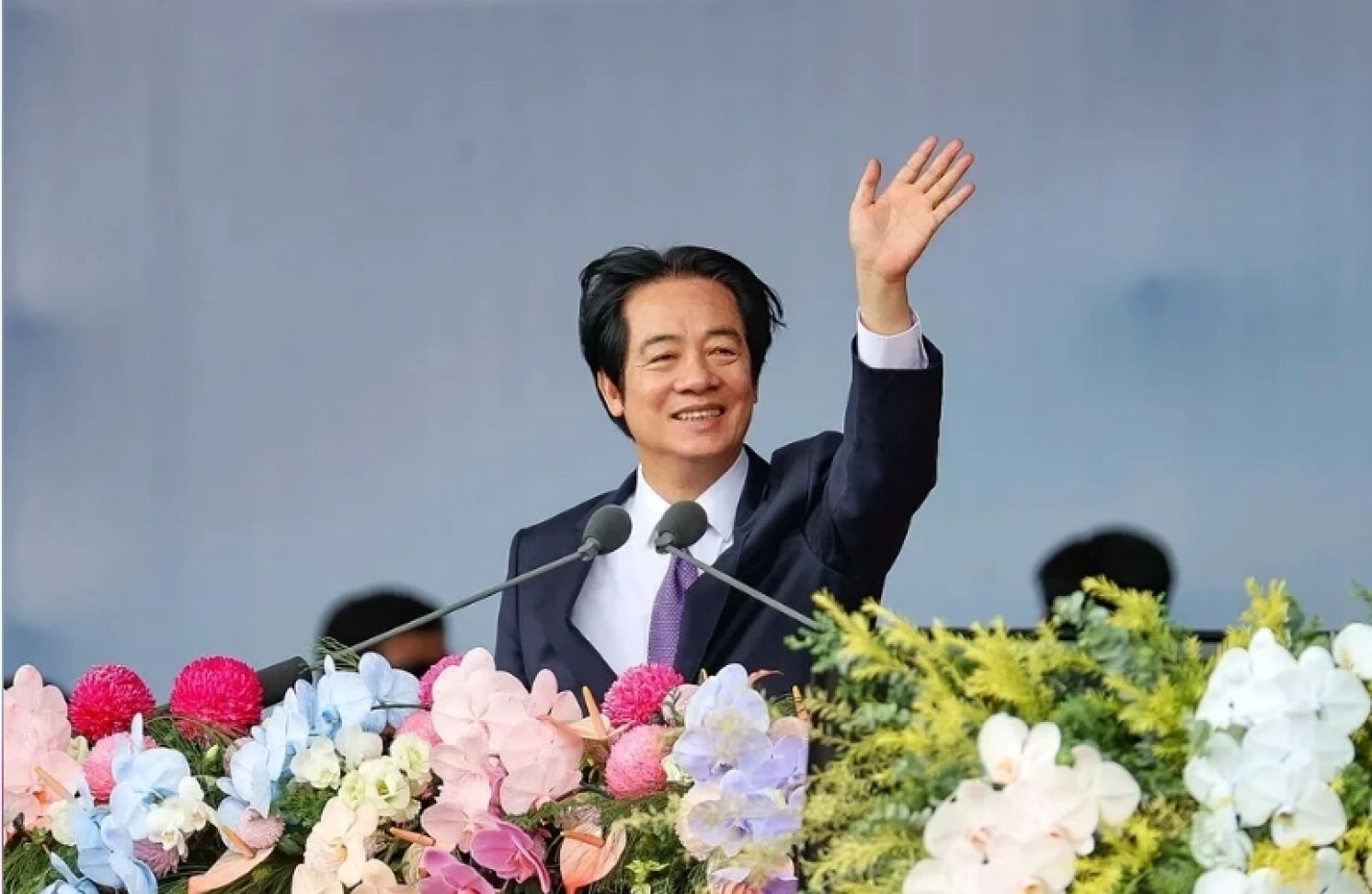
Following two meetings between President Donald Trump of the United States and Chinese President Xi Jinping this year, a pattern of "mutual management" between the United States and China, the world's two major powers, has become increasingly clear, while Taiwan's position and room to articulate its views have been constrained. In his National Day address, President Lai Ching-te emphasized that Taiwan welcomes dialogue between the United States and China to manage their competition, but would never tolerate distortions of World War II history. On the one hand, President Lai forcefully challenged mainland China's erroneous narrative of World War II. On the other, given international realities, he sought to prevent Taiwan from becoming a variable in U.S.-China relations, particularly as Mr. Trump and Mr. Xi may meet again before the end of the year, thereby avoiding Taiwan becoming a bargaining chip at the negotiating table.
The United States has repeatedly emphasized that peace and stability across the Taiwan Strait constitute an "enduring interest" of the United States and are essential to stability in the Indo-Pacific region. China, meanwhile, has described the Taiwan issue as the most sensitive red line in U.S.-China relations. As relations between Washington and Beijing have evolved, their respective narratives concerning Taiwan have frequently exhibited contradictions of varying degrees. Then, at a dinner in Beijing, Mr. Trump described the United States and China as allies during World War II in the presence of Mr. Xi. Subsequently, in Washington, Mr. Trump again recalled U.S.-China cooperation during World War II in Mr. Xi's presence, stating that the two countries had been allies at the time and referring to the history of the Flying Tigers.
In recent years, Beijing has vigorously sought to gain control over the narrative of World War II. What Taiwan must watch particularly closely is that Washington has also begun making similar, albeit ambiguous, references. This suggests that Mr. Trump's understanding of World War II aligns with Beijing's perspective to some extent, raising concerns that he might subsequently echo Mr. Xi’s "one China" narrative. Such a development would naturally influence perceptions worldwide of "One China," the Republic of China, and Taiwan.
However, this issue appears to have become the elephant in the room. Given Taiwan's strongly pro-American orientation, rather than directly and forcefully telling Mr. Trump that he is wrong, Taiwan has chosen to frame its arguments from other perspectives, indirectly conveying to the United States Taiwan's importance in the international community.
Accordingly, President Lai stated that China continues to exert pressure through military and gray-zone activities in an attempt to change the status quo across the Taiwan Strait. In the face of authoritarian expansion, Taiwan's determination concerns not only its own survival but also whether the international community still believes that force must not override rules and that powerful nations must not deprive people of the right to determine their own future.
Amid the artificial intelligence (AI) boom, Taiwan occupies a critical position in global supply chains, which constitutes an advantage. Substantially increasing defense investment and converting that spending into orders for the United States also provides a foundation for Taiwan's negotiations with Washington. With Mr. Trump and Mr. Xi meeting frequently this year, Taipei cannot directly dictate how the two sides discuss Taiwan in order to avoid harming its interests. By first declaring that Taiwan "welcomes dialogue between the United States and China to manage their competition," President Lai has demonstrated both a compromise with the "international reality" jointly shaped by the Trump-Xi meetings and a means of responding to it.
As the United States and China, the two major powers, continue their increasingly close interactions, Mr. Trump and Mr. Xi are likely to meet twice more at the upcoming Asia-Pacific Economic Cooperation (APEC) and Group of 20 (G20) summits, potentially making Taiwan's position even more difficult. In the highly pragmatic environment of international politics, how Taiwan can strike a balance between the United States and China while maximizing its national interests remains an unavoidable challenge for the Lai administration.